‘You need to clean up the mess your generation has left’: Volkswagen’s guilty boomer gets real about sustainability, China—and his spam folder
 Dante Ulanday - News Writer and Moderator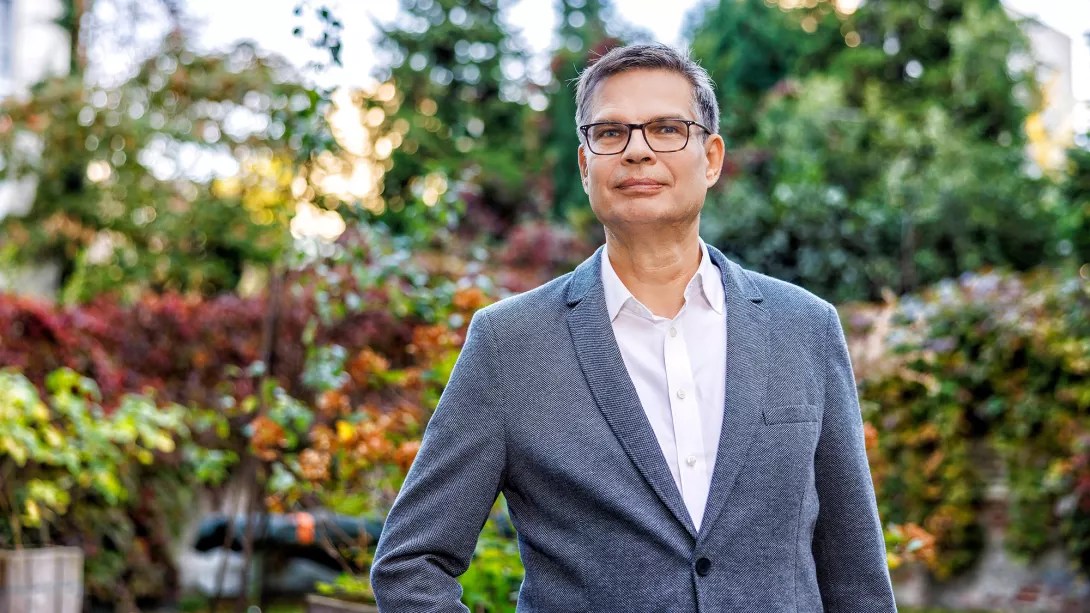
When a recruiter’s email about a job at Volkswagen showed up in Dirk Voeste’s email, he missed it at first. “Normally I don’t look at the spam folder,” he said. When he looked again, the pitch seemed implausible.
The message described a company with €80 billion in annual revenue that was looking for a chief sustainability officer. Volkswagen was far bigger than that—roughly €240 billion in annual sales, Voeste recalled—and he had not been looking to leave BASF, where he had spent 22 years in sustainability, agriculture and biotechnology.
Still, he opened the message. He raised the opportunity with his wife, then with his adult children.
His daughter, he said, gave him the answer.
“You need to clean up the mess your generation has left.”
Voeste took the job, even though, he said, he “didn’t know anyone” and had no idea if he would succeed.
His daughter’s remark has become a kind of private mission statement for the 64-year-old biologist now charged with helping remake one of Germany’s biggest industrial institutions.
Volkswagen’s sustainability chief met with Fortune during Climate Week in New York and talked about decarbonization, biodiversity and recycling. But his real subject was the unraveling of an old economic compact: the one under which German manufacturing delivered well-paid jobs, global export power and consumer prosperity while passing a growing environmental and industrial bill to younger generations.
For the son of a florist from post-industrial Dortmund, he said, it hit home.
The China question
The bill is coming due just as Volkswagen faces an unsettling commercial fact. China, once the company’s most important source of growth and a market where foreign automakers helped build a modern supplier base, is now producing faster-moving, lower-cost EV competitors that are challenging German manufacturers in their traditional stronghold.
Fortune recently reported that “China has arrived,” highlighting a broader reversal for Europe: China is moving beyond low-cost manufacturing to compete in the higher-value industries—including cars and machinery—that made Germany wealthy. Volkswagen’s experience in China is among the clearest examples. The company’s deliveries in the country fell 36.6% in the second quarter as local rivals accelerated their gains in a brutal EV market.
A spokesperson for Volkswagen acknowledged to Fortune that the Chinese automotive market has declined by 20% year-over-year and is under increasing pressure (Volkswagen’s share has declined by 26%), citing factors such as changes in subsidy and tax policies, rising fuel prices and ongoing price competition affecting consumer confidence and weighing on overall demand. The electrification of the market continues to accelerate and Volkswagen’s all-electric vehicle sales are still growing steadily, they added, while Volkswagen remains the leader in combustion-engine vehicles with a market share over 22%.
“Against this background, we expect the overall market for new vehicles to decline to below 21 million vehicles this year,” the company said. “Volkswagen Group China cannot escape this trend” and is adjusting its plans accordingly.
Voeste said we cannot pretend that the old model can be preserved with tariffs, slogans or a long-term climate target printed in an annual report. Europe’s automakers need to move faster, build more affordable EVs, develop better batteries and learn from the market that is forcing the industry to change.
“You need to take up competition as a challenge and not throw yourself on [your] back,” Voeste said.
Volkswagen has long been unusually exposed to China’s fortunes. It built cars in the country for decades, became one of the best-known foreign brands in the market and benefited from a period when Chinese consumers increasingly wanted German engineering.
But Chinese companies have become major competitors in batteries, software and EV manufacturing. They have compressed development cycles, pushed down costs and shifted consumer expectations toward faster refreshes, digital features and lower prices. German automakers now face the possibility that the market where they once sold their greatest volume could become the place where their technological vulnerabilities are most visible.
Voeste repeatedly returned to the idea that companies have to preserve “core values” while adapting their products and business structures to a transformed market. But he said that Europeans like himself can’t mistake China’s impact.
“The amount of vehicles built and brought to the street is phenomenal,” he said, adding that this acknowledgement is the logic behind Volkswagen’s “in China, for China” strategy. Joint ventures and local operations can do more than protect market share, he said; they can show Volkswagen where consumer demand is moving and how quickly the company must respond.
When asked whether China is “winning,” Voeste donned his biologist’s hat: Evolution is not simply a contest in which the strongest survive, he said. It is about adaptation. The companies and economies that endure will be the ones that can balance growth, resilience and sustainability—and change before outside pressure forces them to.
Voeste’s unsentimental message came at a moment when Europe is debating whether its industrial base can withstand competition from China, high energy costs, and pressure from the U.S. to invest across the Atlantic. The U.K. recently overtook Germany in the latest Fortune 500 Europe count, with 76 companies to Germany’s 73. Volkswagen is also undertaking a substantial restructuring to regain competitiveness.
A sustainability strategy with a P&L
Voeste’s pitch is that sustainability must become part of Volkswagen’s commercial operating model. When he joined Volkswagen in 2023, he said, he found a large number of well-developed sustainability initiatives: decarbonization programs, regulatory work, product efforts and reporting systems. “I see trees,” he recalled telling Volkswagen CEO Oliver Blume, “but where is the forest?”
The resulting framework is called Regenerate+, an umbrella strategy spanning four dimensions: nature, our people, society, and business. Decarbonization, a “circular economy” and biodiversity are important fields in the strategy. The plus sign is meant to signal that simply getting emissions to zero is not enough, Voeste said; companies should aim for a net-positive effect where possible (although he joked that he gets a lot of questions over what the “+” stands for).
Voeste wanted the strategy to be built, not imposed. Volkswagen did not hire an outside consultancy to draft Regenerate+, he said. Instead, more than 100 employees took part in recurring discussions while the framework was still being designed, something that sounded like a kind of support group. The meetings operated on the premise that “what happens in Vegas stays in Vegas,” he said, so participants could speak candidly.
After about three or four months, he said, a representative from one Volkswagen brand stood up during a meeting and said: “Look, I really have an issue. I need your help.” That was when he knew he had created enough trust, for a leader to expose a problem and expect “a qualified answer from within.”
Voeste also stressed that so-called circularity can produce revenue, not merely lower emissions, referring to the businesses Volkswagen is developing around remanufacturing, refurbishment, used parts and material reuse. Those businesses could lower dependence on constrained raw materials, help manage supply-chain risk and retain value after a car’s initial sale. They may also be increasingly important as EV makers contend with more expensive batteries, heightened competition and pressure on margins.
“Circular economy,” Voeste said, “is really a new profit pool.”
The company calls the approach “reduce and grow”: reduce costs, supply-chain dependency and the environmental footprint of vehicles, while growing remanufacturing, reuse and refurbished-parts businesses.
The boomer’s reckoning
Voeste grew up in Dortmund, the coal-and-steel city whose fate has long illustrated the dangers of clinging to an industrial past after its economics have changed. His family ran a flower shop, but there was also a funeral-services business. The lesson, he said, was that “business doesn’t stop.” If someone needs help on Christmas or New Year’s, “you will call somebody for help,” he said—and the family business had to answer, 24 hours a day.
He saw the same principle during a year working on a farm after high school. One evening, a rope broke while he was clearing a pig enclosure, forcing him to miss a planned trip to see a new James Bond film. “You can’t say, ‘Okay, I will fix it tomorrow morning,’” he said. “You need to fix it.” For Voeste, that early experience of service and responsibility became a lasting measure of leadership: work is not an abstraction, and inconvenient obligations do not disappear because it is late—or because a broader industrial transition is difficult.
He also saw his Dortmund upbringing as a warning. The region’s long investment in coal and steel became a trap once the economic basis for those industries weakened. The risk, he said, is that the U.S. and Europe repeat the error by insulating themselves from electrification or continuing to invest in technologies whose competitive logic is fading.
“The next generation always had it better than the earlier ones,” he said. “And now the first time our kids are saying, ‘Maybe that’s bending.’”
Volkswagen is hardly a neutral observer of the old order. The company remains one of the world’s largest automakers and carries the legacy of Dieselgate, the emissions-cheating scandal that cost it billions of dollars in fines, settlements and other penalties. It has since tied senior executive compensation in part to environmental, social and governance goals, as Fortune reported in 2020, underscoring how sustainability has become bound up with the company’s governance and reputation.
Voeste, a self-admitted baby boomer, does not deny his generation enjoyed the gains of postwar prosperity: wider access to education, better health care, cheap energy, expanding mobility and technological advances that made life more comfortable for millions. “Everything has grown up and got better for society,” Voeste said. “And what we’re now seeing is it has a price.”
That is why he says his daughter’s challenge carried more weight than a generic appeal to corporate responsibility. Volkswagen’s scale, for all the company’s legacy and contradictions, gives him a chance to influence a far larger industrial system than he could from a smaller organization or an outside campaign.
“If Volkswagen can reduce its emissions by 10% or whatever—15 or 20 or 30%—my leverage is even bigger,” he said.
Voeste’s view of sustainability is ultimately less about targets than about whether executives are willing to behave as if they believe their own commitments. He dismissed the gap between a polished strategy and genuine change as corporate theater. “You have to live it,” he said. “If you don’t live it, somebody [will] say, ‘Come on, it’s a Potemkin, it’s a fake.’”
That applies, he said, to leaders who speak fatalistically about climate change, China or the decline of Europe’s old industrial model. A company cannot control every market shift or political decision, but people in positions of authority still have to decide whether they are acting consistently with the future they claim to want.
“A lot of people who are so pessimistic, they should look inward themselves,” Voeste said. “They need to live it, too.” He paused. “When we can move the needle, we should move the needle.”
For this story, Fortune journalists used generative AI as a research tool. An editor verified the accuracy of the information before publishing.
This story was originally featured on Fortune.com