Why the head of Taiwan’s stock exchange wants you to look past TSMC—and embrace the ‘technology island’
 Dante Ulanday - News Writer and Moderator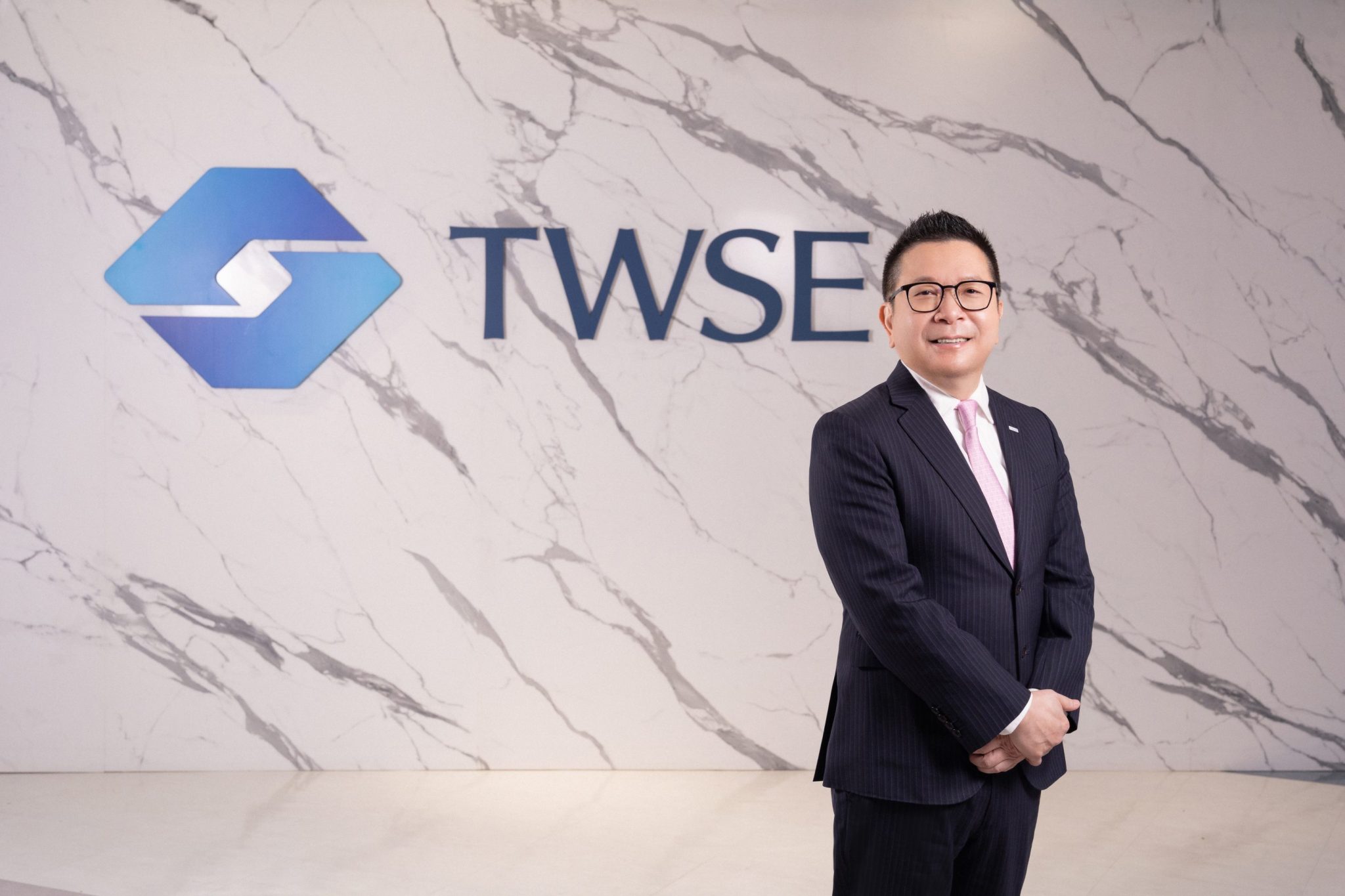
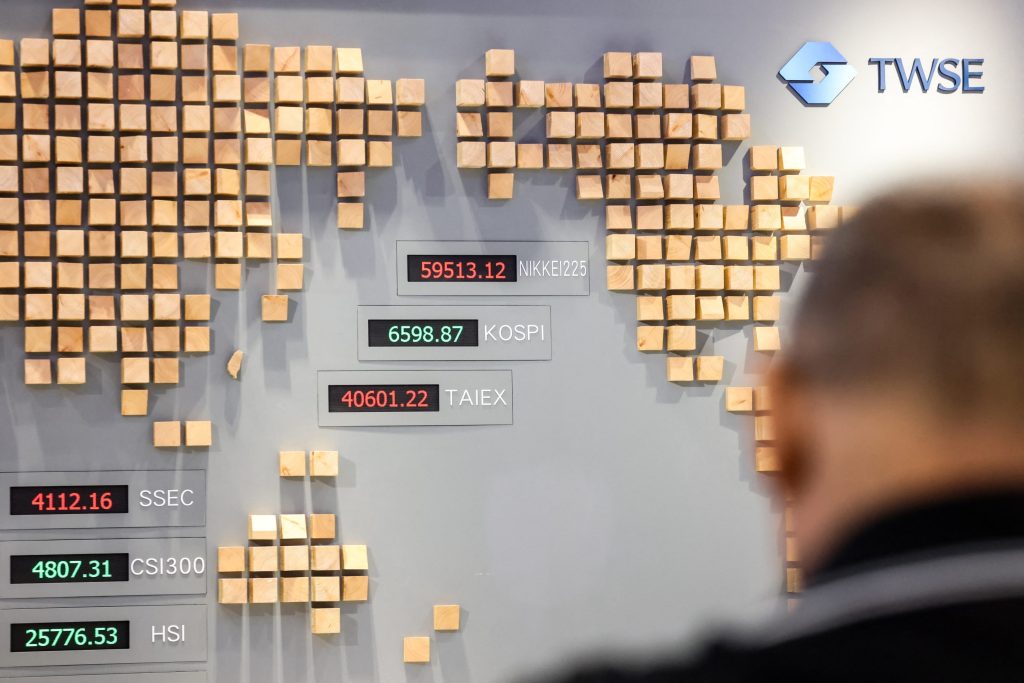
The world’s largest chipmaker, Taiwan Semiconductor Manufacturing Company, released quarterly results that almost any company would envy: a 40% jump in revenue to $40.2 billion, and a 77% jump in profit to $22.3 billion. Investors, though, decided those gaudy numbers weren’t enough. The next day, TSMC shares dropped 7.3%—and dragged Taiwan’s benchmark TAIEX index down in the biggest single-day point decline on record.
TSMC’s outsize role poses a challenge for Sherman Lin, the chair of the Taiwan Stock Exchange Corporation, which runs the island’s main stock exchange. According to Bloomberg calculations, Taiwan overtook India to become the world’s fifth-largest stock market—behind only the U.S., mainland China, Japan, and Hong Kong—in May. And yet two-fifths of that value comes from TSMC.
That’s why Lin and his colleagues at the stock exchange are trying to make sure that investors, domestic and foreign, give all of Taiwan’s other companies a close look too.
“The best way to understand Taiwan is as a technology island,” he says. “We’re like an industrial park. Companies can have fast and agile collaborations among the supply chain.” He rattles off the cities along the corridor that runs from Taipei down through Taoyuan, Hsinchu, Taichung and Kaohsiung with manufacturers all within a few hours’ drive of each other. “Technology really is in our DNA,” he adds.
Taiwan’s pitch contrasts to other equity markets in the region: Hong Kong, for example, is a gateway into mainland China; Singapore is trying to position itself as a home for Southeast Asian companies. Lin, however, is focused on technology.
“When global investors invest in Taiwan, they are not simply investing in one company,” he says. “They are investing in the value created by an entire AI ecosystem and supply chain.”
TSMC, ‘Taiwan’s most iconic company’
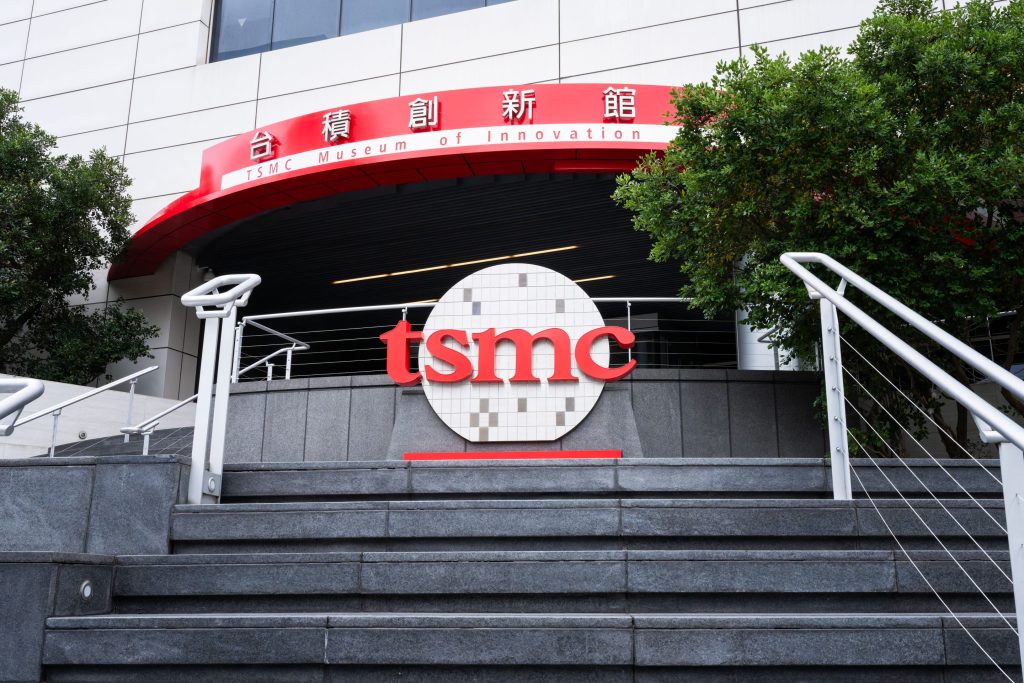
It’s impossible to talk about Taiwan’s stock market and not mention Taiwan Semiconductor Manufacturing Company (TSMC), the world’s leading producer of advanced chips and supplier to companies like Apple and Nvidia. The company is worth close to $2 trillion, making it the most valuable company based in Asia.
It makes over 40% of the TAIEX, Taiwan’s benchmark index; it carries an even larger weighting on third-party indices, like the MSCI Taiwan Index where TSMC accounts for as much as 60% . (The second-largest company on MSCI’s index, MediaTek, has only 5% weighting). Taiwanese often call the company the “sacred mountain” protecting the island’s economy and stock market.
“TSMC is undoubtedly Taiwan’s most iconic company,” Lin says. “But our real competitive advantage is not that we have one or two world-class companies. It’s that we have the world’s most complete and competitive AI ecosystem.”
The macroeconomic data backs him up: Taiwan’s government now forecasts growth of 11% for 2026, which would be the fastest growth rate since 1987.
TSMC “sits on top of a much broader Taiwanese AI-picks-and-shovels supply chain, with hundreds of small-cap investable stocks,” says Ram Thirukkonda, a senior investment strategist at Acadian Asset Management. “Many of the smaller companies in this group have outperformed even TSMC over roughly the last three years.”
Still, he points out that Taiwan’s industry is more focused on chip foundries, meaning gains are “steadier” compared to the more wild swings seen in South Korea’s equity markets.
‘Hidden champions’
Lin is trying to push investors to consider what he calls “hidden champions,” or profitable companies in sectors that may get overlooked by more electronics-focused investors. In January, TWSE’s index subsidiary launched the “Taiwan Pristine Stock Index,” tilting away from the electronics sector to include biotechnology, construction, food, sports and leisure.
Another bet from the stock exchange is the “Taiwan Innovation Board,” launched in 2021 for companies in AI, semiconductors, green energy and other priority sectors. “It’s a kind of revolution for us,” Lin says. “We’d like to take advantage of overseas attention and shift it to the Taiwan Innovation Board.”
The board is still small, with fewer than 30 listed companies, compared to more than 1,000 on the main market. But TIB-listed companies are strong performers: Shares of companies listed on the Innovation Board are up by 177% for the year so far.
Taiwan had 70 IPOs across the Taiwan Stock Exchange and Taipei Exchange in 2025, which together raised $3.3 billion, a record amount for the island’s stock markets. Forty percent of these IPOs were from companies in the AI supply chain, according to Brenda Hu, a senior vice president at TWSE.
Still, Taiwan isn’t raising anywhere near the same amount of money as major financial centers. Hong Kong, for example, raised $37.4 billion across 119 deals last year, making it the world’s top IPO venue for 2025. And this year, Shanghai’s STAR Market has won its own mega-tech IPOs from companies like memory maker ChangXin Memory Technologies and robotics firm Unitree.
Taiwan is also pursuing a program to encourage companies to improve their shareholder value, following in the footsteps of Japan and South Korea. The “Power Up” program pushes Taiwan-listed companies to strengthen their corporate governance and make their disclosures more transparent. As of January, almost 46% of TWSE-listed companies had announced their “power up” plans.
A similar effort in Japan pushed companies to unwind their complicated cross-shareholding structures and expand their share buyback programs, helping lift the value of Japanese companies. These reforms are partly credited for lifting Japan’s stock market, which had languished in a slump for over a decade, to record highs in recent years.
“The main goal of Power Up is very simple: Reduce the information gap,” Lin says. “We would like companies like TSMC and Wiwynn to report to investors on their mid- and long-term strategies.”
‘Perfect timing’
The U.S. and Europe account for 80% of foreign investment into Taiwan; Lin calls these markets his “first priorities.” Yet he’s also interested in the Middle East, which he describes as a “rich area” that TWSE has only made “small steps” into.
Hu also names India and Japan as sources of investment, and suggests that Taiwan’s ETFs and savings accounts could be attractive to those outside Taiwan.
Taiwan has become a growing hub for wealth in the region—in part due to the AI boom. Hu estimates that Taiwan has around 772,000 people with over $1 million in assets, the fifth-highest number in Asia. Eighty percent of them put their wealth into financial assets, the highest proportion in Asia.
Some things about Taiwan will not be changing quickly. The exchange operates from 9:00 a.m. to 1:30 p.m. and closes before most of Asia-Pacific. Other Asian markets are considering ditching some long-term practices in order to keep trading for longer: Hong Kong, for example, recently allowed the market to stay open during typhoons and extreme weather, and is even considering keeping it open over lunch.
Lin had previously floated the possibility of expanding trading hours to 3:30 p.m., with no lunch break. Regulators, however, disagreed, with Financial Supervisory Commission chairman Peng Jin-lung calling it “not a priority” and noting it wouldn’t move forward until there was more consensus among Taiwanese stakeholders.
When asked about these reforms, Lin suggests that Taiwan has “different characteristics” from its peers. “In Taiwan, retail investor protection is quite important,” Lin explains. “The first priority for us is to take care of local investors and give them a more fair and efficient trading process.”
Still, Lin seems to see today’s AI boom as an opportunity to push for change and build Taiwan’s profile. Even as earnings among semiconductor manufacturers keep growing, there’s still an subtle fear among investors and analysts that things will eventually come back down to Earth.
From Lin’s perspective, the energy around AI and semiconducts could last for another two or three years, making it an especially timely moment to act. “This is perfect timing for us,” he says.
This story was originally featured on Fortune.com