Bradley Devlin Joins ‘The Sean Hannity Show’ to Discuss Daily Signal’s New Documentary
 Dante Ulanday - News Moderator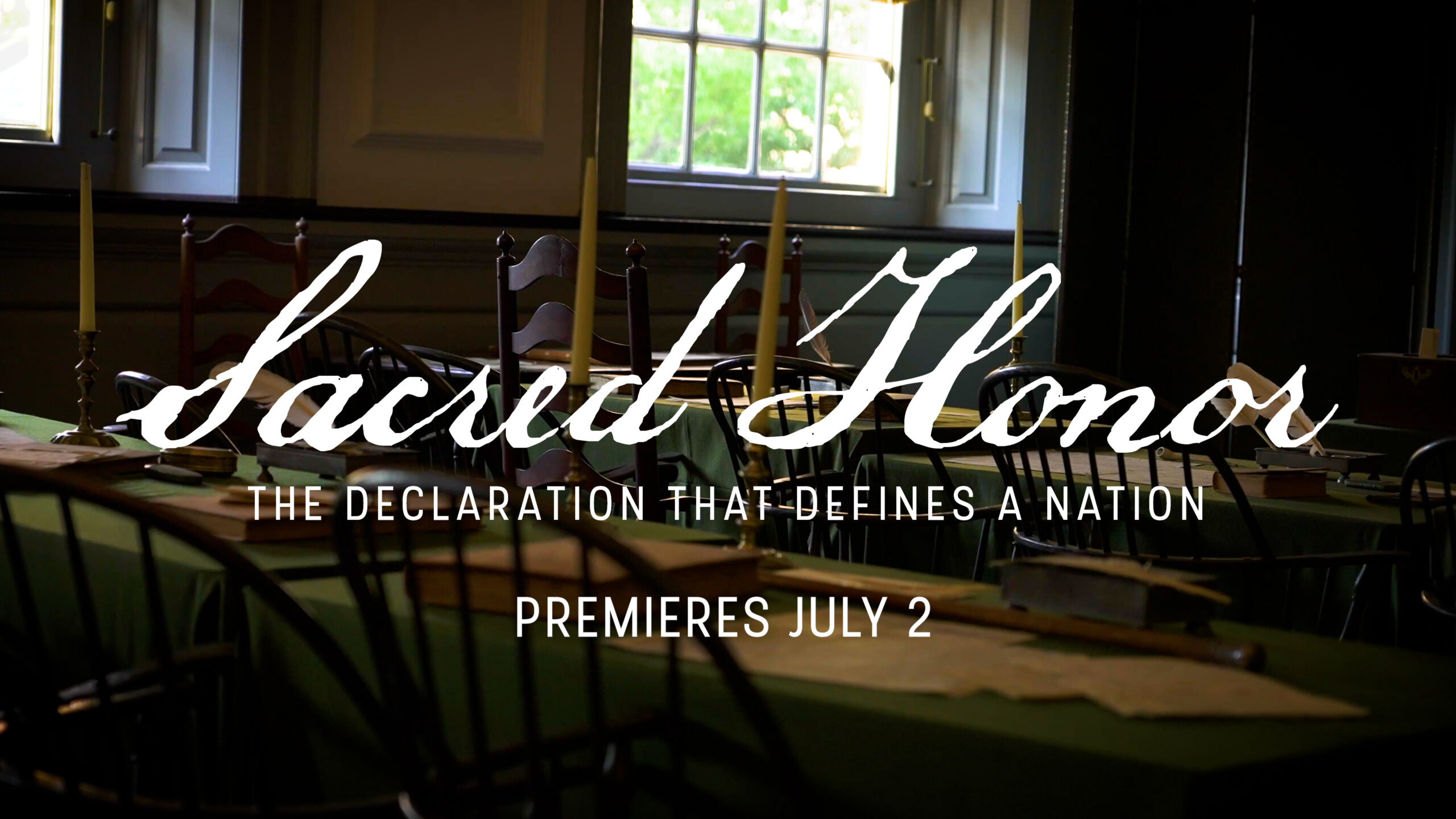
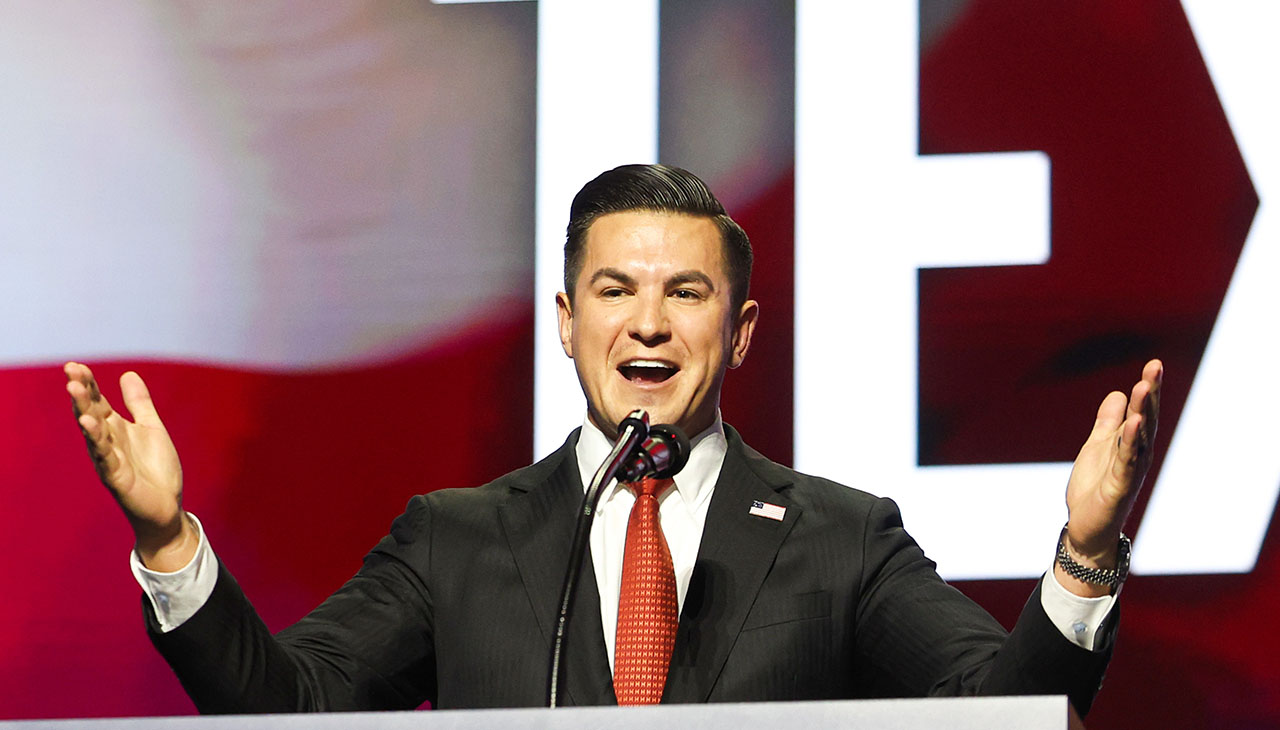
Daily Signal Politics Editor Bradley Devlin joined “The Sean Hannity Show,” hosted by Jason Chaffetz, on June 26 to discuss the Daily Signal’s new documentary titled Sacred Honor: The Declaration That Defines a Nation.”
“Sacred Honor: The Declaration That Defines a Nation” premieres on the Daily Signal’s YouTube on July 2, 2026. The following radio interview transcript has been edited for clarity.
Jason Chaffetz: Our next guest is Bradley Devlin. He’s the politics editor at the Daily Signal, and if you’re not following @DailySignal, you should be. A lot of good content, a lot of good stuff there. I’m going to go to this cut, No. 1, because this is going to set up what we’re going to talk about with Bradley Devlin.
This is “Sacred Honor: The Declaration That Defines a Nation.” It’s the trailer and so, let’s go to Cut One.
Bradley, welcome to “The Sean Hannity Show.” Tell us what you’ve done, why you did it, and where people can see this.
Bradley Devlin: Jason, it’s good to be with you, and thank you to you and your team for playing the trailer. Yes, you heard Mike Lee. You heard Sen. Eric Schmitt from Missouri. You have heard Representative Brandon Gill from Texas, and you’ll hear a few other voices of special guests when this thing premieres on July 2.
The reason that we did this is because America faces a real choice. You know, there was just a Gallup poll this morning that came out that says 45% of Gen Zers report lacking meaning or purpose or both in their lives. And they are getting to the age that the Founding Fathers were when they made that pledge, that solemn pledge, that pledge of their lives, their fortunes, and their sacred honor for their unalienable rights.
Jefferson was 33, Madison was 25, Monroe was just 18 at the time. And so, we made this to try to inspire people to a higher form of politics, to recover the virtues that our founders displayed through their political action, to save this country, to save the republic that they entrusted to us, because every generation has to recommit themselves to that pledge of their sacred honor for those rights, for life, liberty, and the pursuit of happiness. Because if it goes wrong, Marx was 29, Engels was 27 when they wrote “The Communist Manifesto.” Fidel was 30, and Che Guevara was 27 when Cuba had its revolution.
So, it could go one or two ways for this country in the next 250 years. We could lose it a whole lot quicker than that, and that’s why we made this.
Chaffetz: I mean, the timing couldn’t be better. It is so needed and so desperate. Let’s go back to that poll because, you know, generations, they have different experiences.
I’m still having a hard time, like, admitting it, but I have six grandkids. And we got a 3-year-old grandchild, and she’s just so cute, so wonderful. She knows how to take that phone of her mom. She doesn’t have her own phone, but she takes her mom’s phone, and she can type in the four digits.
She knows the four numbers. And then she hits the little green button, and that’s the FaceTime. And then she can see my picture, and she’ll hit it. A couple of times a day, I’ll get this sweet little grandchild will be FaceTiming me and she’s three. It’s just different than the rotary phones that I had when I was growing up. So, but this poll, this Gallup poll, it really is disturbing. Walk us through what this generation, these new younger generations are going through.
Devlin: Yeah. I’m so glad that your grandchildren are using it to connect with their family, but most people aren’t using that technology in this way. They are using it and becoming more isolated and more insular, and as they become more isolated and more insular, they’re feeling lonely. They don’t feel like they’re part of something higher, part of something meaningful, part of something as a collective, whether that’s a community or a locality—your local rotary club or a church—or it’s something bigger. It’s the nation, right? It’s this country that every generation has fought to defend. And I see these trends and how familiar they are to other episodes in history that we just talked about, right? Marx and Engels are writing “The Communist Manifesto” amongst a large upheaval in Europe in the beginnings of the Industrial Revolution.
How do we adjust to that major change? It can go one of two ways. We can answer the call of the Enlightenment and mix that modern and ancient thinking into something like the Founding, or it can go terrible, and we get something like the Russian Revolution and “The Communist Manifesto” a few decades before it.
Or we have the communist revolutions that follow the upheaval and the destruction that was World War II. And here we are today, Jason, in a very similar situation. We have AI, right? Pope Leo chose his name because he’s hearkening back to the previous Pope Leo, who was in the middle of the Industrial Revolution. He says, “We’re gonna go through something similar here with the AI revolution, and we need to make sure that we’re protecting human dignity, reminding each o-each other what it means to be human.” And what it means to be human, I think, is encapsulated so well in our founding story. It’s a political story.
The Declaration of Independence is this culmination of one of the greatest political acts in history. It’s not just principles that come out of nowhere. It is a fierce contest of ambitions and convictions and interests, and they have to navigate that as a collective. And as a collective that’s really operating together as the first time, they’re figuring out the hierarchy in that room in Independence Hall in Philadelphia, and they’re figuring out what their collective identity is based on the heritage they had received from Britain.
And so, here we are. We need to recover what it means to be an American, what it means to be human, even at a more fundamental level, and that’s how we’re gonna be able to address these problems that are emerging from this technological revolution that’s happening right before our eyes.
Chaffetz: Yeah, the technology itself, it can be good, right?
Think of the advances in medicine and the research that you can do, but it can also be bad. It can be downright evil, and I think it’s scary in many ways. I wrote an op-ed a few months ago for foxnews.com, and the op-ed was basically, it’s the one issue, artificial intelligence, that’s scaring everybody, and yet no political party has taken a definitive stance on how it fits in today’s culture.
And if we don’t adhere and stay true to the principles in our founding documents, then shame on us because it will overwhelm us. You go to my X account, and I tweeted out Marc Thiessen. There was the research done by The Washington Post about how AI is being trained up to be very leftist, that only X AI is being trained to have more of a balance in its approach.
But if you think that we’re going to be relying on AI to do everything and that there are the evil sides, the evil forces, if you will—do you think they’re just gonna sit by and let this happen? No, they’re going to want to manipulate these models and redefine history and redefine who we are as a people, and that is a scary thing.
And then you’ve got this whole generation, and Bradley, I want you to talk about this. You got this generation that gauges the success of their life, their worthiness, based on how many likes and how many people are following them. Like, it’s a contest, and it’s so destructive to a young generation and to an older generation.
Devlin: I mean, so many great points there, Jason, and especially when it comes to getting the shock, the hit, of having the likes pour in or the reposts pour in.
I mean, this is what it’s all about, right? They have isolated themselves, and now they’ve replaced real community with a fake community that can only register its presence or its love for you in the form of likes and clicks and all of that, and AI has a very similar function. Not only is it leftist, Jason—of course, we expected that.
We saw the images of black George Washington when Google first came out with its AI. Everybody saw how ridiculous that was. But it’s also a flatterer, and that’s what’s so dangerous, too. We’ve seen this really be a cancer on the minds of so many young people, so many people in Gen Z and even Gen Alpha now, who have committed terrible acts against themselves, even up to suicide, because AI has egged them on.
It’s a flatterer. And so the first impulse that you have politically when you see a problem like that, it’s going to be, what’s a limiting principle? And I’m not inherently against limiting principles. You want to be able to find a place where you can stake your flag in the ground and stake it deep so that it lasts for generations.
But what the founding story tells us about how to confront these problems, even for people in my age demographic, young folks around 20 to 35, is it’s not a limiting principle, it’s a virtue. It’s the highest virtue in politics, and that’s prudence. It’s judgment. It’s cultivating that judgment.
And being a flatterer, as AI is to you, telling you, “No, that’s perfect. Oh, do more of that. Yeah, just one more bite of that apple, Mr. Adam and Mrs. Eve,” that is what can really derail you. The founders were not flatterers in any way, shape, or form. They were strong, great men. And I think the miracle of the founding is that there were so many great men of history in a single room.
And so, we need to recover that sense of who we are and develop that virtue of prudence by understanding our history and knowing our history so that we’re not replacing a real community with fake communities, whether or not that lives in a chatbot or on your favorite social media program.
Chaffetz: What I hear you saying, and I totally a hundred percent agree, you got to get the principles right.
When I served in Congress, I would draw on the whiteboard and at the top I’d write principle, and then I’d put a line under it, and then I’d put policy underneath that.
And it was a reminder, visually, for them and for me to just say principle over policy. I can answer any policy question if you get the principle right. And I think that’s the issues that people are facing today.
If you get the principles right of how you want to lead your life and what you want to do. And the second part of that is, at least for me personally, I believe in prayer, and I believe in Jesus Christ, and I believe in a religion and a higher being and the reality of Jesus Christ.
And that prayer and that ability to communicate and to be inspired is something that drives me and that informs me, and that can keep me centered if I don’t get off track.
Devlin: Absolutely. And just the prayer to be thankful for the existence of God in the first place, because without God, there is no principles to which we can build on. There is no objective truth. There is no enduring, eternal thing that we can point to and orient ourselves in the world, right? And that’s what makes the Declaration so powerful. It’s this mixture of modern political philosophy and ancient political philosophy all infused with Christian teaching that tells us not only to just go to the policy, but to go to the principle, and not only to just go to principles, but go to first principles, right?
Chaffetz: Bradley Devlin, congratulations. Politics editor at the Daily Signal, and you got a documentary, “Sacred Honor: The Declaration That Defines a Nation,” coming out, I believe you said July 2.
So, watch for that. Thanks so much for joining us on “The Sean Hannity Show.” Do appreciate it. We’ll be right back.