
Booted from Malaysia, tech guru Balaji Srinivasan finds a new patron for his ‘nomad’ commune: Kazakhstan
 Dante Ulanday - News Writer and Moderator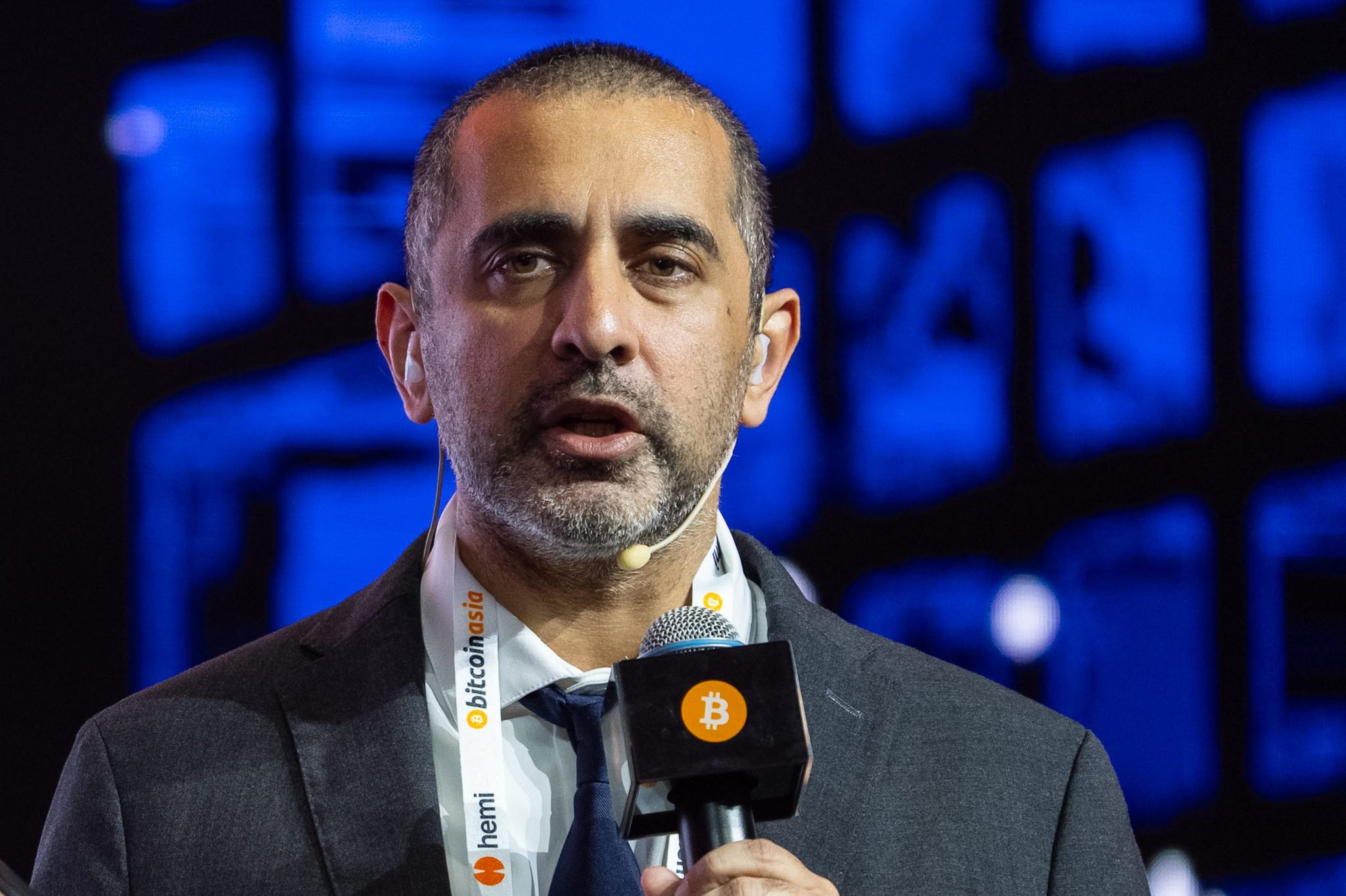
A controversial, self-styled tech prophet had been searching the world for a place to set up a nomadic education community. Balaji Srinivasan, the former chief technology officer for Coinbase, thought he’d found one in Malaysia—specifically, in a largely uncompleted complex just across the waterway separating the Southeast Asian country from its neighbor, Singapore.
Srivansan’s Network School had operated for years without incident, until a single social media video that was studiously vague about its location caught the eye of social media users, which built into a regulatory crackdown that shuttered the school’s doors on July 21.
The day after, Srivansan was in Central Asia, signing an MOU with authorities in Kazakhstan. “Our new campus will become a haven for global techno-optimism, with expedited visas, streamlined redomiciliation, and active recruitment of talent,” he wrote in a July 22 post on X.
It’s the latest development in a weekslong saga involving Srinivasan and his dream to build the “network state,” a new kind of political entity spawned from the energies of the global tech sector; it’s a drama that sits in the middle of crypto-friendly tech utopianism, continued tensions over the Israeli-Palestinian conflict, and even China’s real estate crash.
Why Malaysia shut it down
Malaysian authorities opened their investigation after online allegations that Israeli nationals had joined Network School’s programme, entering the country on second-country passports. Malaysia does not recognize Israel and generally bars entry to Israeli passport holders.
The probe found no evidence of travel document violations. Yet the Iskandar Puteri City Council chose to revoke Network School’s business license on July 21, instead arguing that it had breached licensing conditions and premises-use requirements. The council also revoked the Network School’s advertising license, after finding that the business activities carried out at the premises differed from its office-use license.
“The Johor state government takes note of and fully supports the decision of the Iskandar Puteri City Council’s special meeting to revoke the business licence and order the cessation of all activities of NS0 Malaysia Sdn. Bhd. (Network School) in Forest City, effective 22 July 2026,” Onn Hafiz Ghazi, chief minister for the state of Johor, said in a social media post on July 21.
The dispute is now widening to a diplomatic incident. Malaysia’s foreign minister told Bernama, a Malaysian government news agency, that one dual U.S.-Israel citizen was ordered to leave the country. That led the U.S. State Department to summon the country’s ambassador to explain Malaysia’s position on Israel.
Fortune has reached out to the Network School for comment.
What is Network School?
Srinivasan launched Network School in Malaysia in 2024 as a 90-day pilot for around 100 global participants. He expanded it into a year-long program in early 2025.
The compound functions as a co-living space for so-called technopreneurs and content creators. For $1,500 per month, it offers lodging, meals, gym access and a regular programming of tech workshops and hackathons.
Participants told Singaporean newspaper The Straits Times that the program was cheaper than similar offerings in Silicon Valley and in the United Arab Emirates, which can cost between three and five times more.
“The existing model of U.S. undergraduate education is broken… you pay $100k+ for a four year degree, and then budget nothing for maintenance over the course of your life,” Srinivasan wrote in X post in August 2024.
Srinivasan touted the school’s proximity to neighboring Singapore as a key selling point. “It’s beautiful and sunny, and less than an hour from a major city (Singapore) with an international airport (Changi). That means you can be heads down during the week, head into the city on the weekends for fun, and get to just about anywhere in Asia within the same day,” he wrote at the time.
Not too long ago, Malaysian officials had embraced the project. Just three months ago, digital minister Gobind Singh Deo described the campus as an “emerging destination for global technology talent”. (The visit drew some flak online, as netizens questioned government engagement with Srinivasan’s projects, despite his views on alternative communities and governance.)
Network School’s proximity to Singapore has drawn attention. A July 10 social media advertisement for the school highlighted that the school was on a “man-made island near Singapore.” That sent online sleuths to do some digging, which is when they uncovered that Network School was actually based in Johor, the Malaysian state that sits across the Singaporean border.
That same day, an Instagram post from a pro-Palestinian activist group accused Network School of bringing Israelis to Malaysia, in violation of the country’s laws.
Awkwardly, in 2023 Srinivasan had used the term “tech Zionism” to describe the network-state strategy of accumulating land and pursuing self-determination. The term, invoked as an abstract governance analogy, landed badly in a country where public sentiment is strongly pro-Palestinian.
As the walls began to close in, Srinivasan tried to ask for a meeting with Prime Minister Anwar Ibrahim, and threatened to freeze investments in Malaysia, to no avail.
Who is Balaji Srinivasan?
Srinivasan served as Coinbase’s chief technology officer in 2018 after the exchange acquired his startup, leaving the company a year later. He previously co-founded genetic-testing startup Counsyl and was a general partner at venture firm Andreessen Horowitz.
He is also known for his long push to detach the global tech sector from national sovereignty. In 2013, he argued that the U.S. tech industry should leave the country and move abroad. In 2022, he released a book detailing his idea for the “Network State.”
Srinivasan was also one of the first people in Silicon Valley to warn about the threat and disruption posed by the COVID pandemic, just as it was starting to spread in the U.S. in early 2020. He also briefly drew attention in 2023 for an ill-fated bet that Bitcoin would hit $1 million in value within 90 days—which he abandoned after just two months, donating funds to the counterparty, the GiveDirectly charity, and a Bitcoin development fund.
Still, Srinivasan put on a brave face as he conceded the bet. “I just burned a million to tell you they’re printing trillions,” he posted on X at the time.
The China angle: Forest City
Network School operated out of Forest City, a residential mega-project launched in 2016 by Chinese property developer Country Garden. The project was even supported by China’s Belt and Road Initiative, a global strategy to build infrastructure across Asia, Africa and Europe.
The goal was to build a city that could house 700,000 people, built on the Malaysian side of the Strait of Johor, just across from Singapore. Yet despite nearly $100 billion in committed investment, construction was never finished. Only 15% of the project has been built and an even smaller 1% is occupied.
Forest City apartments were too pricey for most Malaysians, meaning the project targeted Chinese buyers. But Chinese capital controls, the COVID pandemic, and then the property crisis–triggered by the collapse of real estate giant Evergrande–have undercut those hopes.
Country Garden, once seen as a “model developer,” has been mired in debt restructuring since 2023. The developer reported $22.9 billion in revenue last year, more than two-thirds lower than its 2022 peak of $63.6 billion.
Johor has since folded Forest City into the newly signed Johor-Singapore Special Economic Zone and designated it a special financial zone, with officials pitching it as a hub for international family offices and capital.
Why Kazakhstan?
Details on Network School’s new campus are scarce. Yet Srinivasan promises to offer a space for educational and research opportunities in AI, and support for tech start-ups.
The five year memorandum of understanding inked between Network School and the country’s Ministry of Artificial Intelligence and Digital Development sees both signees organizing international events and hackathons, as well as a possible Network State conference in Kazakhstan this year.
“This memorandum will form the basis for the implementation of joint projects and the further development of Kazakhstan as a regional center for artificial intelligence and innovation,” Kazakhstan’s Ministry of Artificial Intelligence and Digital Development wrote in a July 22 Instagram post, which added that the campus will also be built to attract leading specialists, technology companies and investments to Kazakhstan.
Kazakhstan is trying to pitch itself to foreign tech companies. “We invite capital leaders to leverage our unique jurisdiction as your secure, high-yield launching pad,” President Kassym-Jomart Tokayev said on July 10. The country is planning a one-gigawatt data center campus with partners like Nvidia.
This story was originally featured on Fortune.com