Xi Jinping has made China’s hard-tech rise core to his policy—and U.S. containment is only fueling those plans
 Dante Ulanday - News Writer and Moderator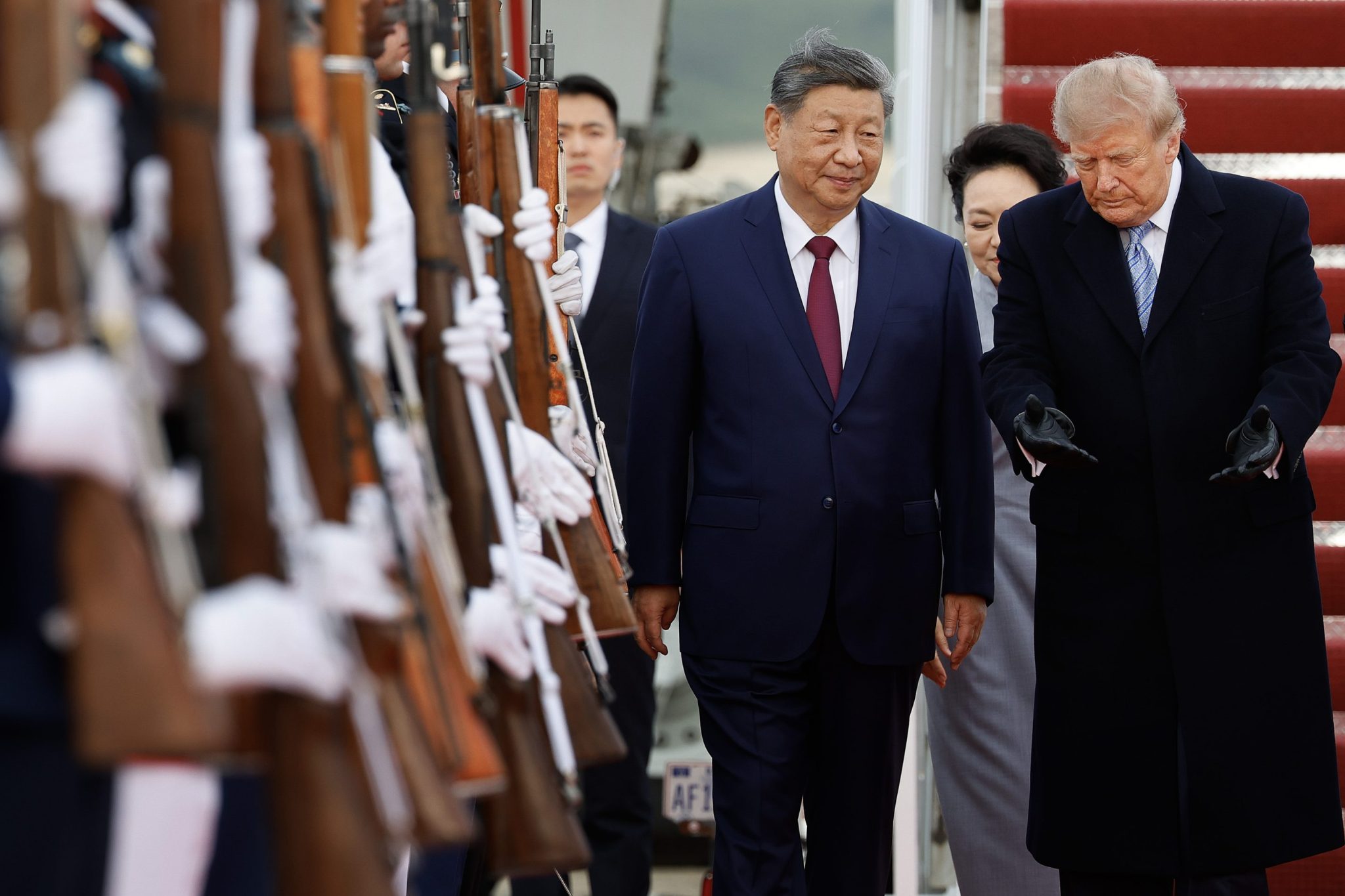
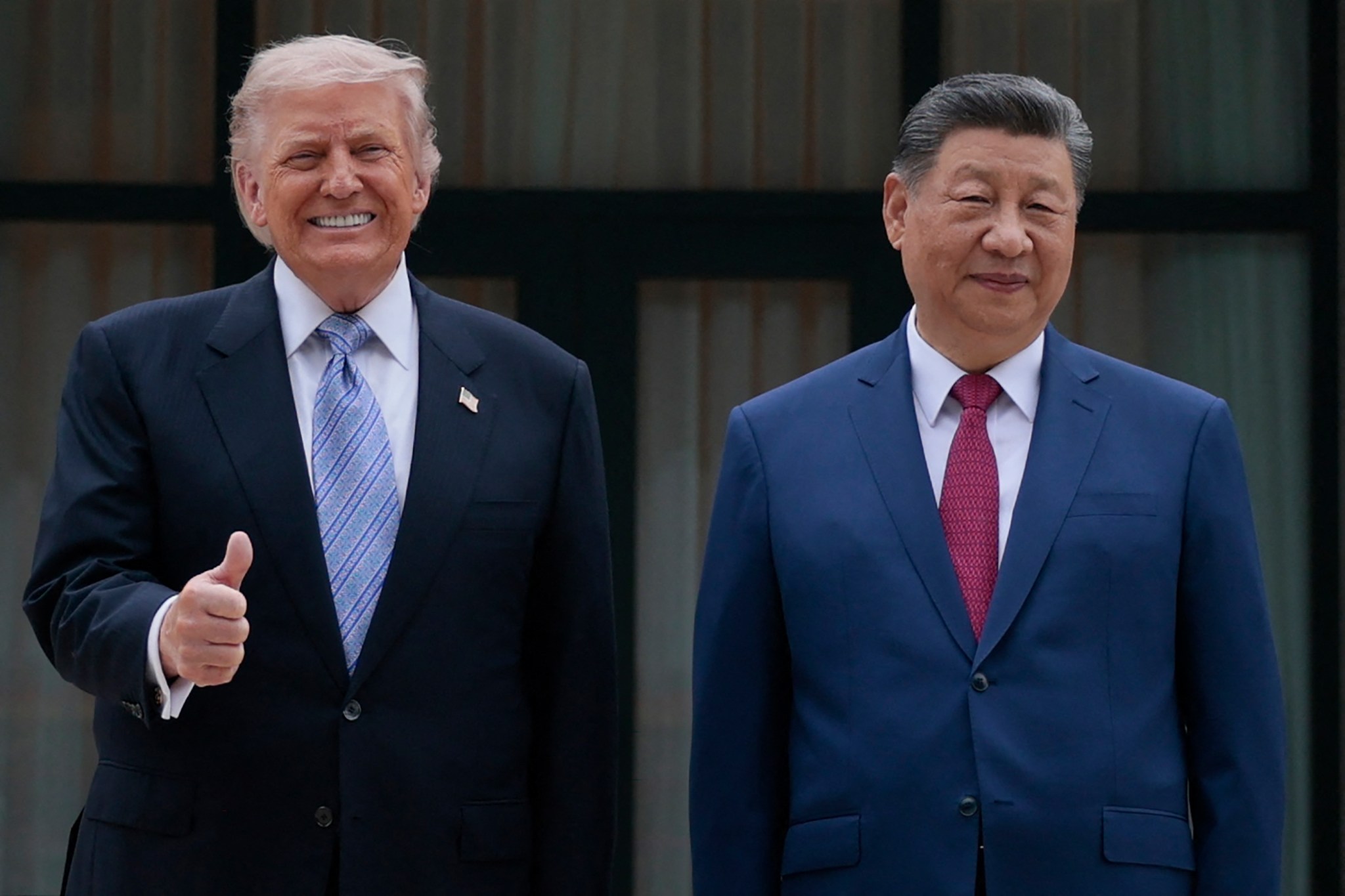
When Xi Jinping arrives in Washington on Thursday, artificial intelligence will top the agenda. Both sides have even agreed to an “AI hotline” to warn each other of runaway systems—at least according to the U.S.
Whereas once the U.S. looked upon China as a “fast follower” in technology, it now confronts a country that’s also on the frontier—ironically, in part due to U.S. action.
Washington’s technology blockade is proving to be one of the greatest accelerators of Beijing’s hard-tech rise. Far from isolating China, U.S. pressure has mobilized capital, talent, and global partners to turn containment into the very fuel of China’s technological superiority.
The blockbuster debuts of ChangXin Memory Technologies and Unitree Robotics are proof that Beijing can deliberately mobilize capital and scientific expertise to build national champions in semiconductors, robotics, and advanced manufacturing.
China’s 15th Five-Year Plan (2026–2030) is both the blueprint for Beijing’s push for absolute technological sovereignty and the decisive test of that ambition.
A flurry of signals from the top validates this shift towards hard technology. Chinese President Xi Jinping made a personal trip to Shanghai in April, elevating basic research as the main control switch for downstream industries. This was followed by Xi’s attendance at the National Science Conference in Beijing, where the president ordered China’s financial system “to invest early, invest in small-scale projects, invest for the long term, and invest in hard technology.” The capstone came at the World Artificial Intelligence Conference in Shanghai, when Xi warned against creating “new historical injustices” in the era of AI.
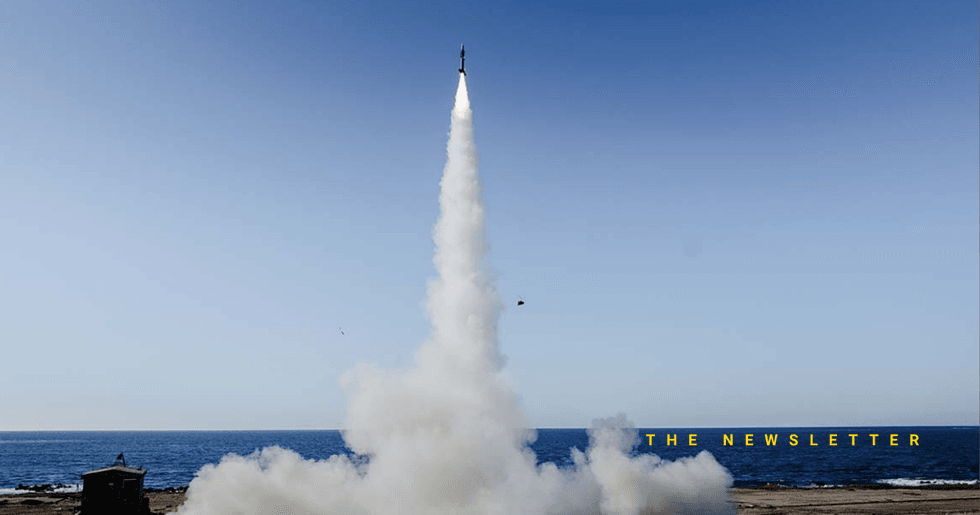
The U.S. is trying to hold back China’s tech development. Washington has expanded its entity-list sanctions and launched the “Pax Silica” initiative to secure AI, semiconductor, and critical-mineral supply chains among trusted partners. Now it is pressing international partners to stay out of China’s digital frameworks: The U.S. is preparing to tell dozens of countries they must pick sides in the AI race, warning that they will be excluded from the U.S.-led AI coalition if they also sign up for Beijing’s competing framework, Reuters reported last month.
Yet history suggests the tech blockades don’t keep China behind but instead force it to accelerate its journey to self-reliance. When the Soviet Union withdrew its technical experts in the 1960s, China built its own nuclear and ballistic capabilities in response. Later frictions, such as those over the 1996 Taiwan Crisis, spurred China to create the Beidou navigation system, a competitor to GPS. Banned by U.S. law from the participating in the International Space Station, China built its own station, Tiangong.
Beijing is determined to dictate how the artificial intelligence and hardware revolutions unfold. The state is decisively shifting resources away from the property- and consumer-led growth model of the past two decades, instead placing semiconductors, advanced manufacturing, and humanoid robots at the core of national strategy.
China is pulling three specific levers to sustain this tech push.
The first is capital. A listing frenzy, together with the rise of the scientist-entrepreneur, is reshaping how tech industrial investment is mobilized, turning finance into a driver of hard tech growth.
China’s research spending surpassed 3.9 trillion yuan ($568 billion) in 2025, with basic research funding reaching nearly 280 billion yuan, passing 7% of the total, a record high. China has launched a national venture capital guidance fund to back early-stage, long-term, hard-tech firms, aiming to mobilize 1 trillion yuan ($145 billion) in total capital.
The second lever is talent. Academics are steadily moving to Chinese research institutions; at least 85 world-class researchers relocated to China between early 2024 and late 2025, according to a tally by CNN and Times Higher Education.
In July, Nobel laureate Omar Yaghi left UC Berkeley for a full-time position at Tsinghua University, where he will launch a new AI-assisted materials laboratory. He’s joined by a whole group of academic superstars: Nobel laureate in Chemistry Hartmut Michel to Jilin University; Nobel laureate in Economics Philip H. Dybvig to Southwestern University of Finance and Economics; and Nobel laureates in Physics Ferenc Krausz and Andre Geim and Fields Medalist Ngô Bảo Châu to the University of Hong Kong.
According to a recent study by the Carnegie Endowment for International Peace, just over 57% of top AI talent in 2025 had degrees from Chinese institutions, up from 46% in 2022. (Just 13% had degrees from U.S. institutions).
China’s research ecosystem is now a frontier, not a fallback, for the world’s best scientists.
The third lever is international academic cooperation. China’s transnational education market is rebounding from two years of slowed approvals: In 2026, the Ministry of Education approved 86 joint institutions and 133 joint programs across 174 universities, covering brain-computer interfaces, big data, and foundational science.
Based on my conversations with senior officials in Beijing, it’s evident that China’s top leadership explicitly instructed the education system to open up to the outside world, and prioritize partnerships in engineering, mathematics, and other hard-tech disciplines.
Beijing is running a dual-track strategy: build sovereignty at home, and build influence abroad. Robots, chips and AI-driven vehicles will generate commercial revenue while feeding China’s AI models with vast streams of real-world training data that U.S. firms can’t replicate.
China is also redrawing the global tech sector by exporting an open-source, hardware-centric ecosystem. Open-source models like Kimi K3, Qwen, and DeepSeek are enabling the Global South to build sovereign AI without relying on Western infrastructure.
To be sure, this bet comes with real costs. Heavy R&D allocation has weighed on household consumption, leaving a sluggish consumer market beside a surging hard-tech sector.
But Beijing has accepted this cost because Washington’s pressure has convinced Beijing that technological sovereignty is a matter of national survival.
Whatever gets agreed at the Xi-Trump meeting—assuming anything gets agreed regarding tech at all—will just be a preamble to a decades-long tech competition.
After Xi returns to Beijing, U.S. politicians will debate, once again, how to constrain China’s rise. But China has already caught up—and it’s already moved on.
The opinions expressed in Fortune.com commentary pieces are solely the views of their authors and do not necessarily reflect the opinions and beliefs of Fortune.
This story was originally featured on Fortune.com