Inside Europe’s biggest companies—and the forces reshaping them
 Dante Ulanday - News Writer and Moderator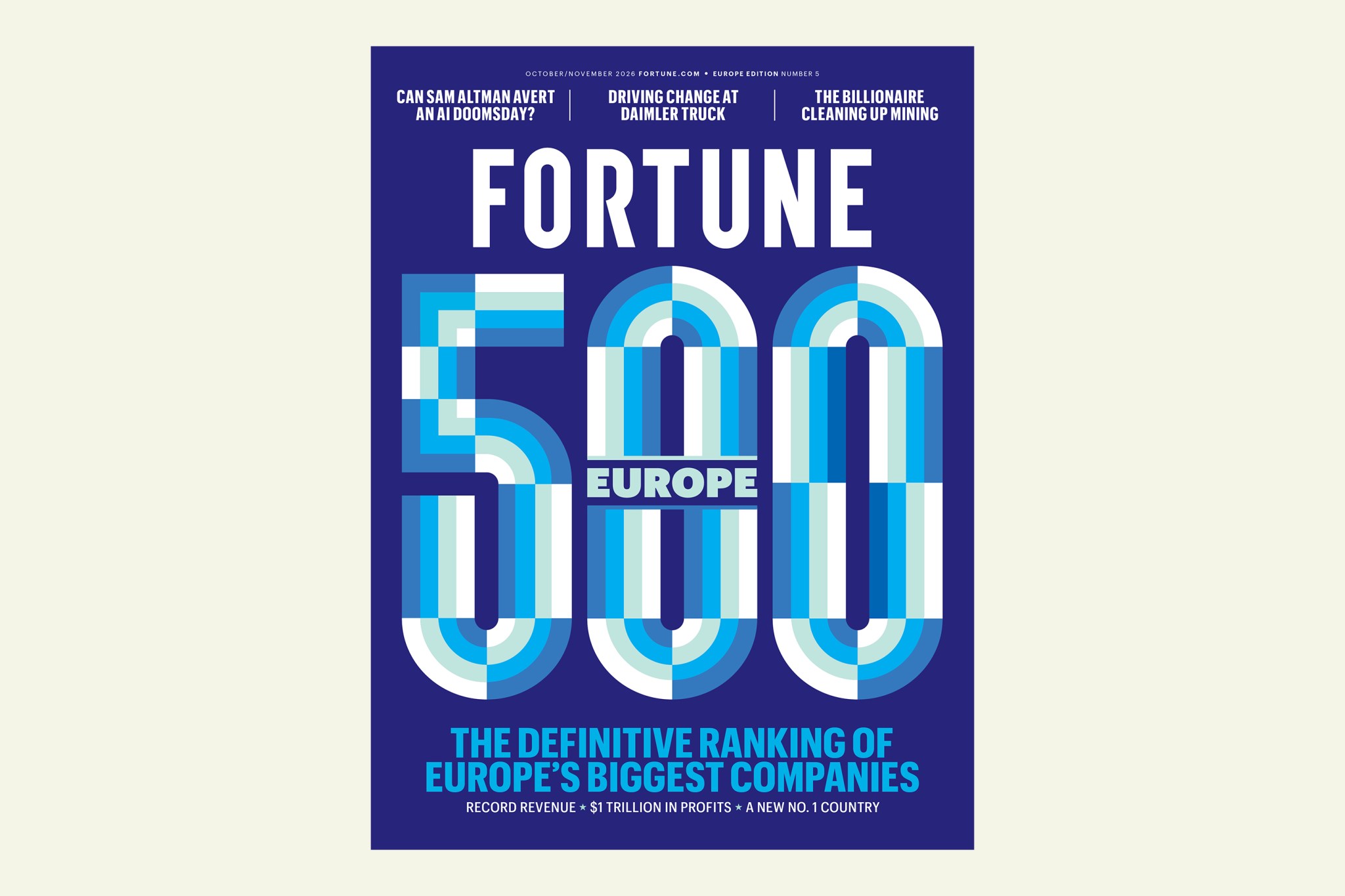
Fortune’s Europe team descended on the London Stock Exchange on Sept. 16 for a special launch of the Fortune 500 Europe list. The ceremonial ringing of the bell to open the market also signified the release of our latest ranking of Europe’s biggest businesses.
The combined revenues of companies on this year’s Fortune 500 Europe list hit a record high of $15.5 trillion, and profits reached $1 trillion.
It was particularly fitting to launch the list in London. For the first time in the four-year history of the Fortune 500 Europe, the U.K. overtook Germany to have the most ranked companies.
This year’s list also showed a continued lack of female representation. Only 8.6% of Europe’s 500 biggest companies are run by women. (In comparison, around 11% of Fortune 500 CEOs are women.) I spoke with Karin Rådström, chief executive of Daimler Truck (No. 72 on the Fortune 500 Europe), who said the persistent underrepresentation of women at the top of European businesses makes her all the more motivated to succeed.
Rådström—a former elite rower—knows a lot about competing at the highest level. As CEO of the world’s largest truckmaker, she is steering the company in a new direction, expanding its defense business and preparing for growing competition from China. You can read more here.
Another European giant that is facing growing competition from Chinese rivals is Vestas. The Danish wind turbine manufacturer (No. 212 on the list) has faced a turbulent time recently but is now back in the black under the leadership of Henrik Andersen. Fortune features writer Sam Birchall interviewed Andersen about his early fascination with wind turbines and his unusual decision to hold a faux funeral for the company’s old motto.
September also saw fears around AI hit a fever pitch after an Anthropic safety researcher warned there was a 10% chance the technology “could kill all humans” within the next 10 years.
Against this backdrop of growing public concern and calls for a slowdown in frontier AI development, Fortune editor-in-chief Alyson Shontell flew out to San Francisco to speak with OpenAI CEO Sam Altman. They discussed whether AI can ever truly be controlled; the threat it poses for humanity; how to avoid a worst-case scenario; and the ChatGPT-maker’s much-anticipated IPO. You can read about their conversation here, or watch it in full at fortune.com/titans.
While the tech world grapples with questions about AI’s future, other business leaders are focused on tackling today’s challenges. The Fortune Change the World list highlights the companies tackling societal and environmental issues as part of their core business function.
For Andrew “Twiggy” Forrest, founder of metals group Fortescue, that means taking on two enormous challenges: cleaning up one of the world’s most carbon-intensive industries and helping rebuild a war-ravaged Ukraine. Both are high-stakes and costly gambits, but as Vivienne Walt reports, Forrest is determined to prove that business can be a force for positive change.
It’s a philosophy we share at Fortune.
This article appears in the October/November 2026: Europe issue of Fortune.
This story was originally featured on Fortune.com